You do not need to memorize 78 meanings before starting tarot. Begin with a question, a small spread and enough time to notice the images. Treat the result as a perspective to explore, rather than a decision made on your behalf.
Choose a question with room to think
“What should I notice about this situation?” leaves more room for reflection than demanding a guaranteed outcome. Write the question before choosing the cards. Keep it focused on your experience and the choices available to you.
Give each position a purpose
For a simple three-card practice, use situation, perspective and next step. The position is part of the interpretation: the same card may highlight a present difficulty in one position and a resource in another. Name the positions before revealing the cards.
Look before you look up
Notice a gesture, a color or a relationship between figures. Then read the card meaning and compare it with your observation. A conventional meaning is a starting point, not a reason to ignore the question or force the imagery to fit.
Keep the first reading small
Write one sentence for each position and one question you still have. Avoid immediately repeating the spread because the first result feels unclear. Returning later can show how your interpretation changes.
Try the process in Oraculum
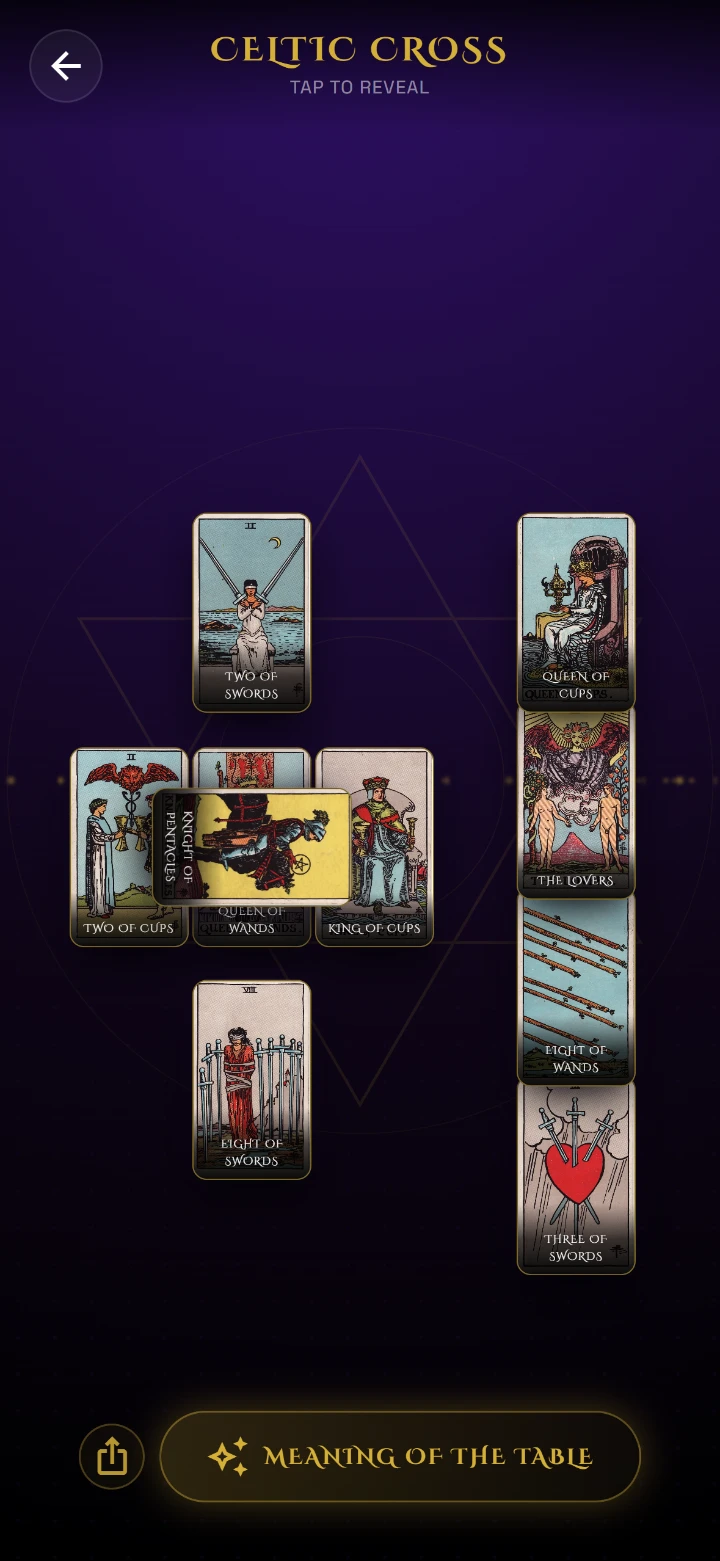
Choose a tarot spread in the app, reveal its cards and read the meaning attached to each position. Begin with the free spreads; exclusive Dark Moon and Cosmic artwork belongs to Premium. The journal can help you revisit the reading.
Turn a meaning into a reading
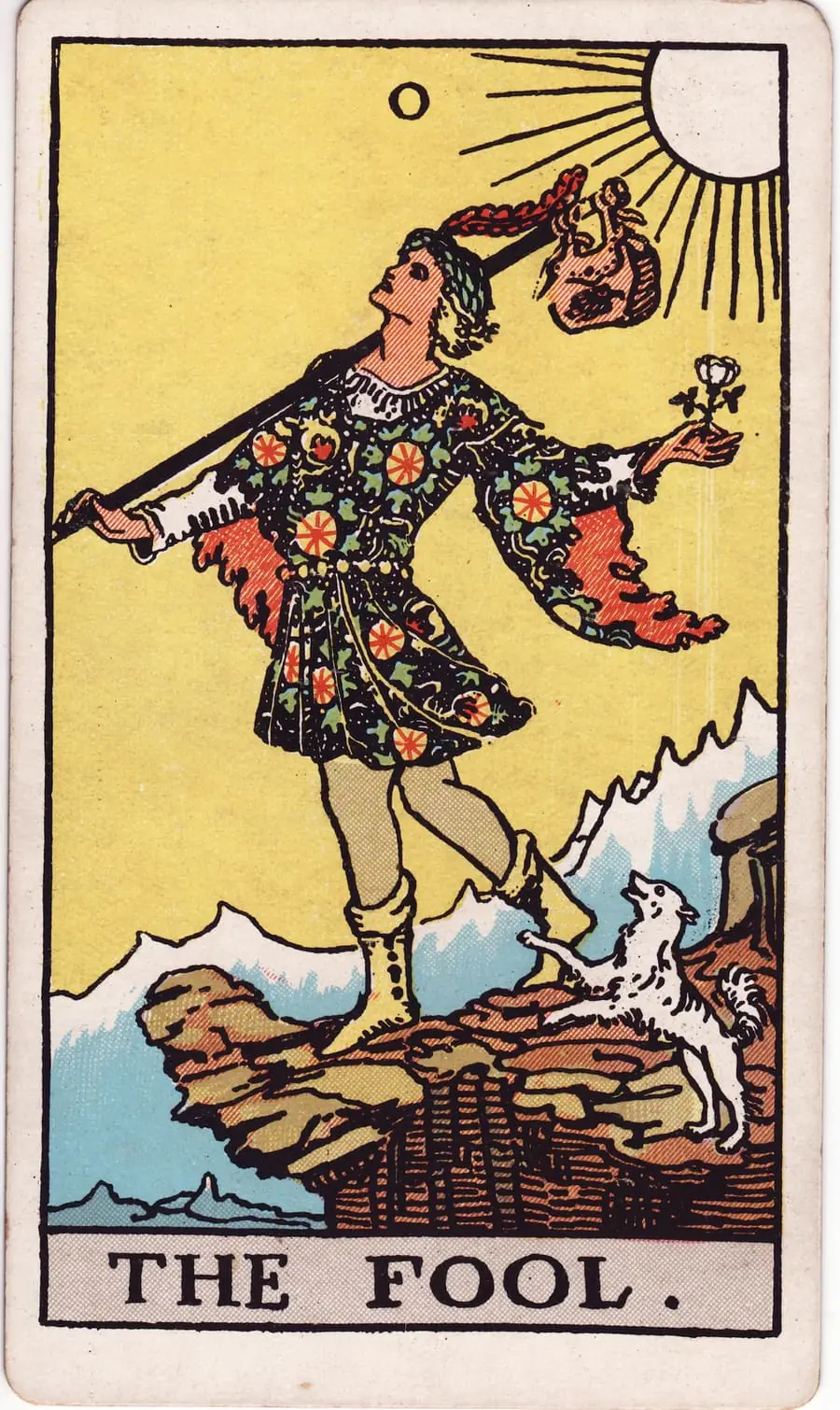
A keyword is not a ready-made answer. Make the connection in three stages: describe what the card shows, consider the meaning you are studying, and return to the position and question. Imagine a spread about organizing a project. The Fool in the situation position might suggest an open beginning, but it does not establish that abandoning a plan is a good decision. In the perspective position, the same image might invite a small experiment before a larger commitment. For a possible next step, look for a concrete, reversible action such as making a sketch or asking for information. The reading becomes useful through that connection with context, rather than by turning an image into an instruction.
A five-minute record of your first spread
Write the question and all three position names before revealing any cards. For each position, complete two sentences: “In this image I notice…” and “In my situation, this makes me consider…”. Finish with “One action I can choose is…”. Add an alternative: what would you think if you had not drawn these cards? This comparison helps you notice when an interpretation merely repeats an existing wish. You do not need an elaborate story or an explanation for every symbol. One specific observation is more useful than several vague paragraphs. When you return to the entry, record what happened and what differed from your expectation. You can value the experience without treating coincidence as evidence.
Reversals, repeated draws and the limits of a question
Reading reversed cards is a choice of method. Some readers use them to explore blocks, excesses or an inward expression of a symbol; others read only upright cards. Decide before the spread. No single card establishes an affair, a diagnosis or what another person thinks. If your question depends on facts, seek those facts. Repeating a reading until a pleasing image appears changes the record: it begins to show your preference rather than your first reflection. Instead of drawing again, write down what unsettled you and which real information would help you understand the situation.
Do I need a special deck to begin?
No. Start with a deck whose images you can explore comfortably. Learning the structure of a spread matters more than collecting several decks.
22 Major Arcana Tarot Cards: Meanings & Interactive Guide ↗
Historical reference: A history of tarot cards · V&A
For reflection and entertainment. Readings do not guarantee outcomes or replace professional advice.