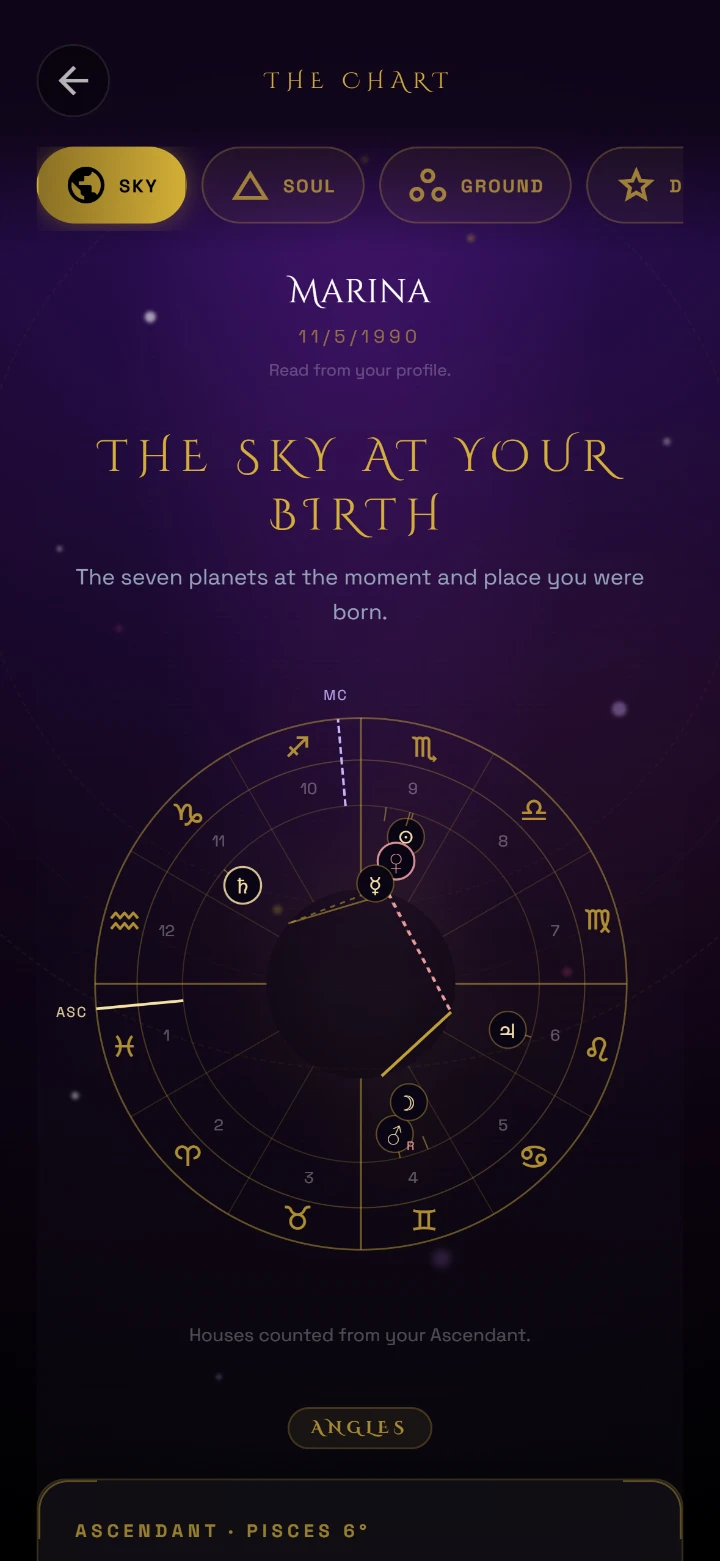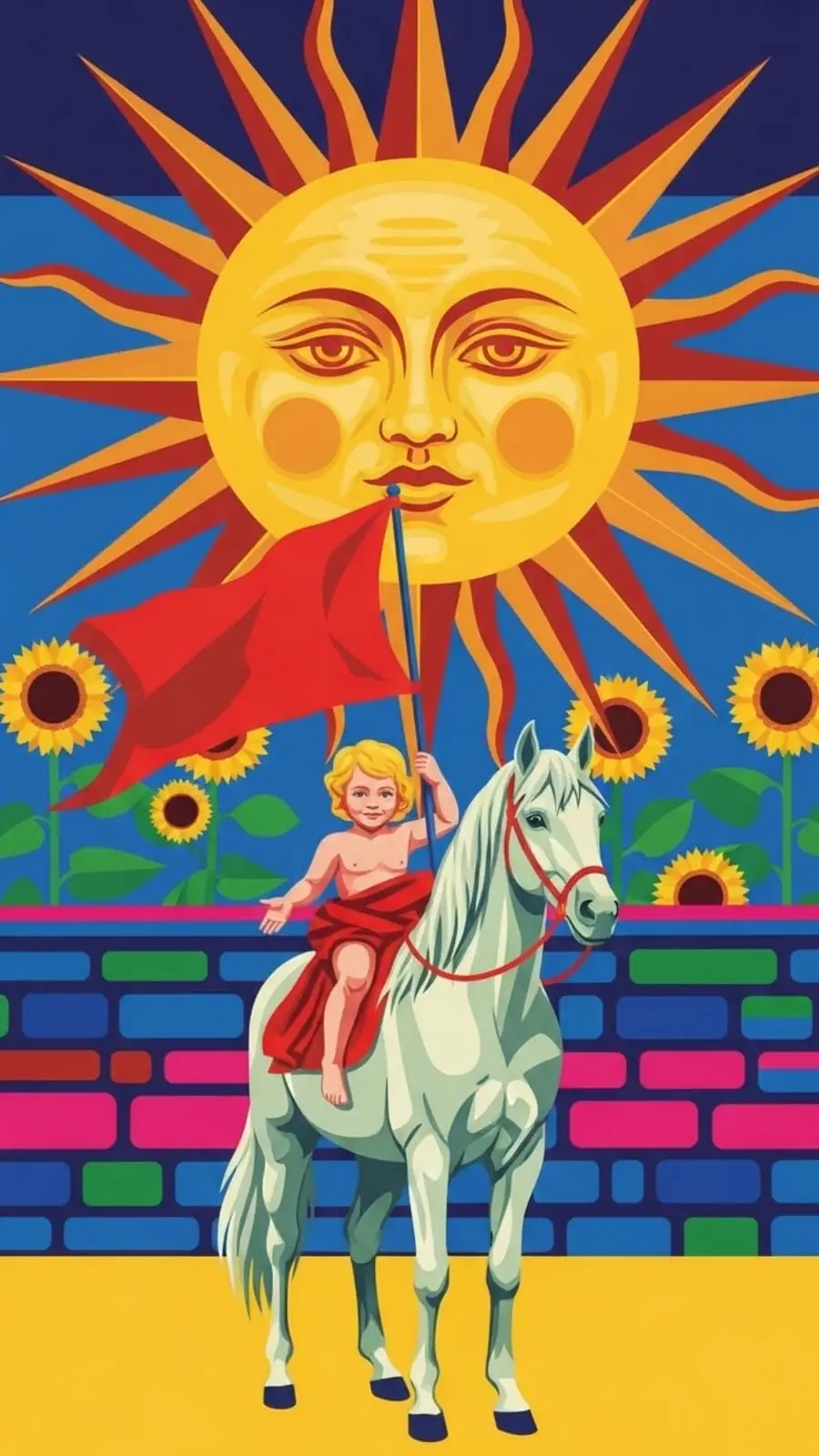
A horoscope organized by Sun sign is an introduction to astrology, not a description of every part of a person. A birth chart brings several symbols together. Sun, Moon and rising sign are three common starting points within astrological interpretation.
Sun: identity and expression
Astrologers often associate the Sun with identity, vitality and self-expression. Use those associations as questions: where do you feel engaged, and how do you express what matters to you? A sign is not a complete personality assessment.
Moon: needs and responses
The Moon is commonly interpreted through emotional needs, habits and instinctive responses. Instead of treating a description as a fixed label, compare it with your experience. Notice what fits, what does not and what needs more context.
Rising sign: the chart’s starting point
The rising sign, or Ascendant, depends on the eastern horizon for a place and time. An inaccurate birth time can change the Ascendant and house placements. If you do not know the time, keep that uncertainty visible rather than inventing precision.
Read one layer at a time
Start with the three symbols separately, then consider where their themes agree or differ. Planets, houses and aspects add other layers. Reading all of them at once can create more confusion than understanding.
Explore the chart in the app
Oraculum includes a daily horoscope and birth-chart tools. Enter the best birth information you have and review the resulting symbols. The complete Map is available through Premium or credits. Astrology is an interpretive tradition, not a scientifically validated personality test.
What changes when the birth time is missing
Date, time and place answer different parts of the calculation. Local time must be converted into an instant using the time zone and historical rules applicable to the city. A current UTC offset does not automatically resolve a birth that happened decades ago. Without a reliable time, a precise Ascendant should not be presented as known. The Moon can also change signs within a day; in that case, the date alone cannot identify which of the two signs applies. Look for an available record and note whether the time is exact, rounded or remembered. A useful form should acknowledge missing information instead of silently inserting a time and presenting the result as certain.
Reading Sun, Moon and Ascendant together
Begin with three distinct questions rather than reducing someone to a label. In astrological language, the Sun commonly organizes themes of identity and expression; the Moon is associated with needs and emotional responses; and the Ascendant describes an initial orientation toward the world within the method used. If the descriptions differ, you do not have to choose one as the true version. Notice the contexts in which you recognize each theme and those in which none fits. These associations belong to an interpretive tradition, not a personality diagnosis. Record concrete examples from experience and keep the counterexamples. Other chart factors add context, but a more detailed chart does not turn an interpretation into an inevitable fact.
What to check before comparing two charts
Two websites may show differences because of their settings. Compare the date, city, time, time-zone conversion, zodiac and house system before concluding that a calculation is wrong. A placement close to a sign boundary also requires attention to the precision of the instant. Keep the input data with the result so it can be reproduced. When beginning, understanding one clearly stated configuration is more useful than switching between unexplained results. This page does not offer a complete free birth chart or promise to predict events from your data.
Is my daily horoscope the same as my birth chart?
No. A general Sun-sign horoscope groups people by one factor. A birth chart uses additional birth details and contains many placements.
For reflection and entertainment. Readings do not guarantee outcomes or replace professional advice.