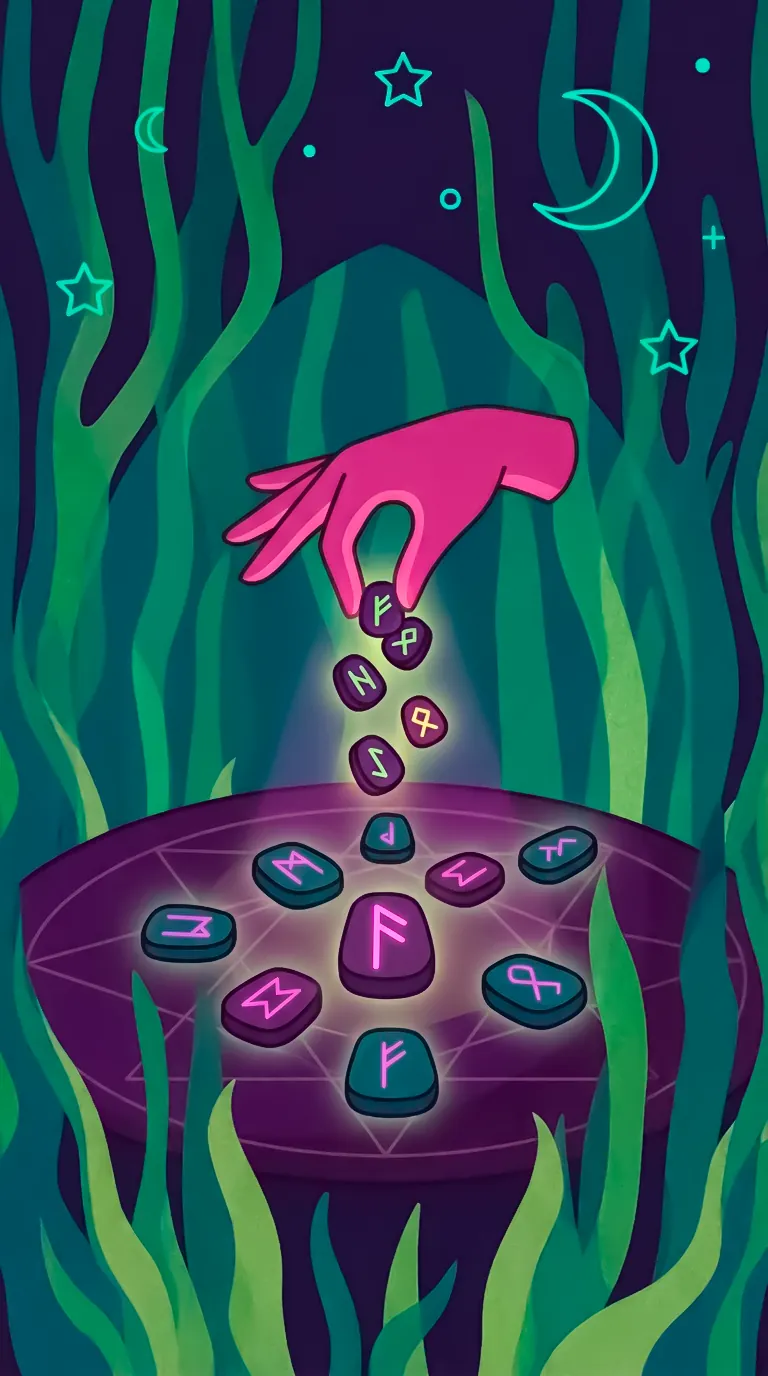
Runes were used as writing systems. Modern divinatory readings are a different context, even when they use those same signs. Keeping that distinction visible makes it easier to learn without turning every contemporary association into a historical claim.
Start with the alphabet
Elder Futhark is one runic alphabet, with 24 signs. Other runic alphabets differ, so an image labeled “Viking runes” does not necessarily describe the same system. Learn the name, shape and sound of a sign alongside its modern interpretations.
Distinguish a source from an association
A present-day guide may attach themes such as movement, resources or protection to a rune. Ask whether you are reading a historical inscription, a later text or a modern author’s interpretation. These sources answer different questions.
Try one symbol before a full spread
Write a focused question, draw one rune and note what the symbol brings to mind. Then read its interpretation. Record one possible connection to your question without forcing every detail to match.
Leave space for uncertainty
A rune does not establish what someone else thinks or guarantee what will happen. If the reading is unclear, describe what remains unclear. Collecting more symbols immediately is not always the most useful next step.
Use Oraculum as a starting point
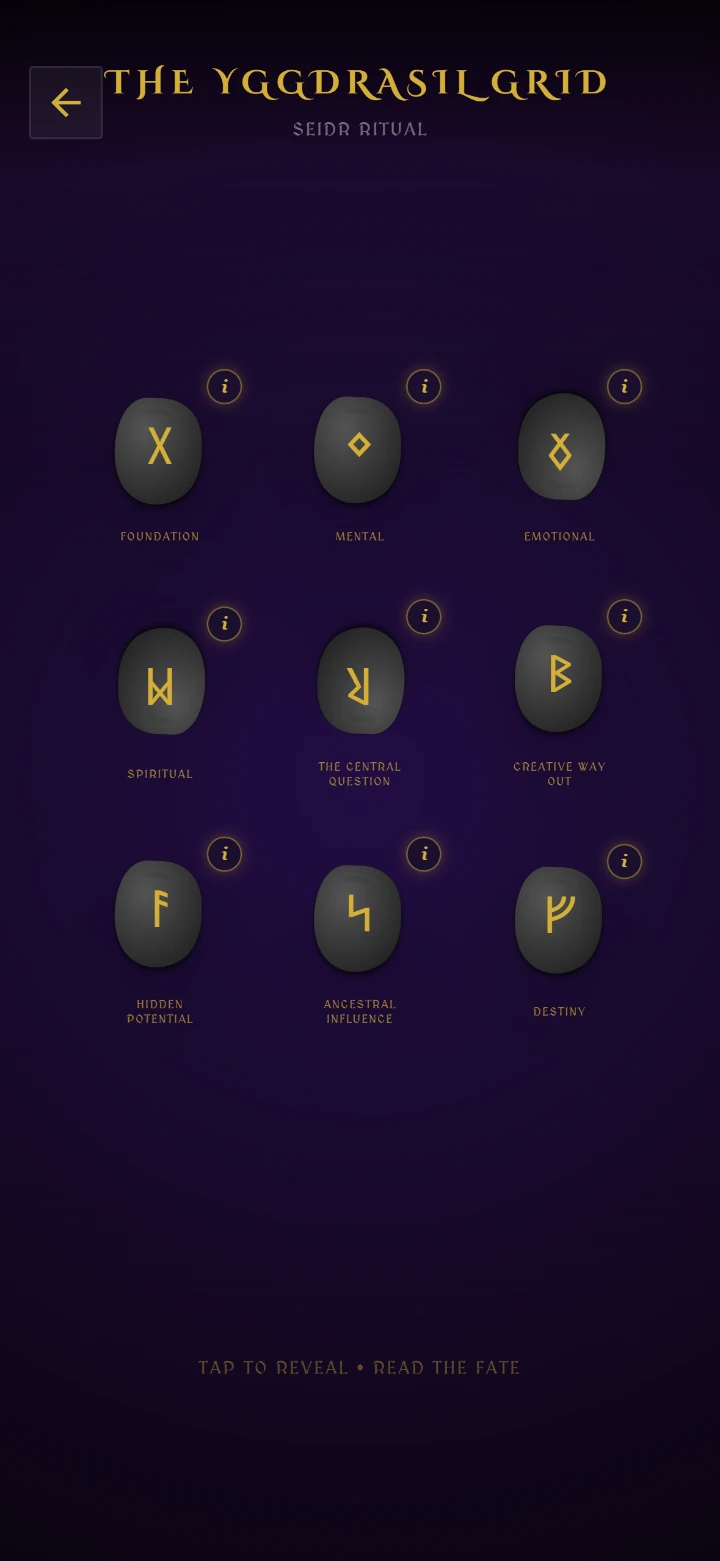
The app offers rune spreads and meanings to explore. Try a small reading and compare the text with your own notes. Use historical resources alongside divinatory guides when you want to study the signs in greater depth.
Historical writing and symbolic readings are different
When a guide calls an interpretation traditional, ask: traditional in which context? An inscription, a rune poem and a modern reading manual are different kinds of source. A name or association studied within one tradition does not automatically establish that every present-day drawing method was used in the same way in the past. Begin with two columns in your notes: what the source documents and the reflection you make today. This lets you study the signs without creating a history the material does not support. Oraculum uses the 24-rune Elder Futhark. Other sets have a different number or arrangement of signs; treating the alphabets as identical can make learning confusing.
A brief reading with Fehu as an example
Fehu commonly opens the Elder Futhark and is associated in modern readings with resources and movable wealth. For a question about a project, use that association to notice what is already available: time, equipment, help or skills. This is not an announcement that money will arrive. For a question about routine, the same keyword may help you notice where resources are being spent without intention. A useful interpretation returns to context and ends in an observable action, such as listing the week’s commitments or reviewing a task. After the reading, also write what the symbol cannot establish. That final sentence limits the tendency to turn a broad association into an explanation for any event.
Study one rune at a time
Record the name, draw the sign and note two or three keywords from the material you are using. Look carefully at its shape: similar names and differences between alphabets can be confusing at first. Choose an everyday example that relates to the association and another that does not fit. If you study reversed positions, check whether the sign and your chosen method make that distinction; do not automatically impose the logic of cards on every symbol. The app’s spreads and interpretive layers are a separate experience.
Are all runic alphabets the same?
No. Different runic alphabets existed in different contexts. Check which system a guide or app is using.
Historical reference: Runes · National Museum of Denmark
For reflection and entertainment. Readings do not guarantee outcomes or replace professional advice.